
From Hustle to Structure
For a long time, hustle felt like the only honest option.

If you grew up in Nigeria, you know this feeling deep in your bones. You were taught, whether it was said out loud or just implied, that effort solves every problem. The belief was simple: if you just work harder, stay up later, take on more, and push through the exhaustion, everything will eventually fall into place.
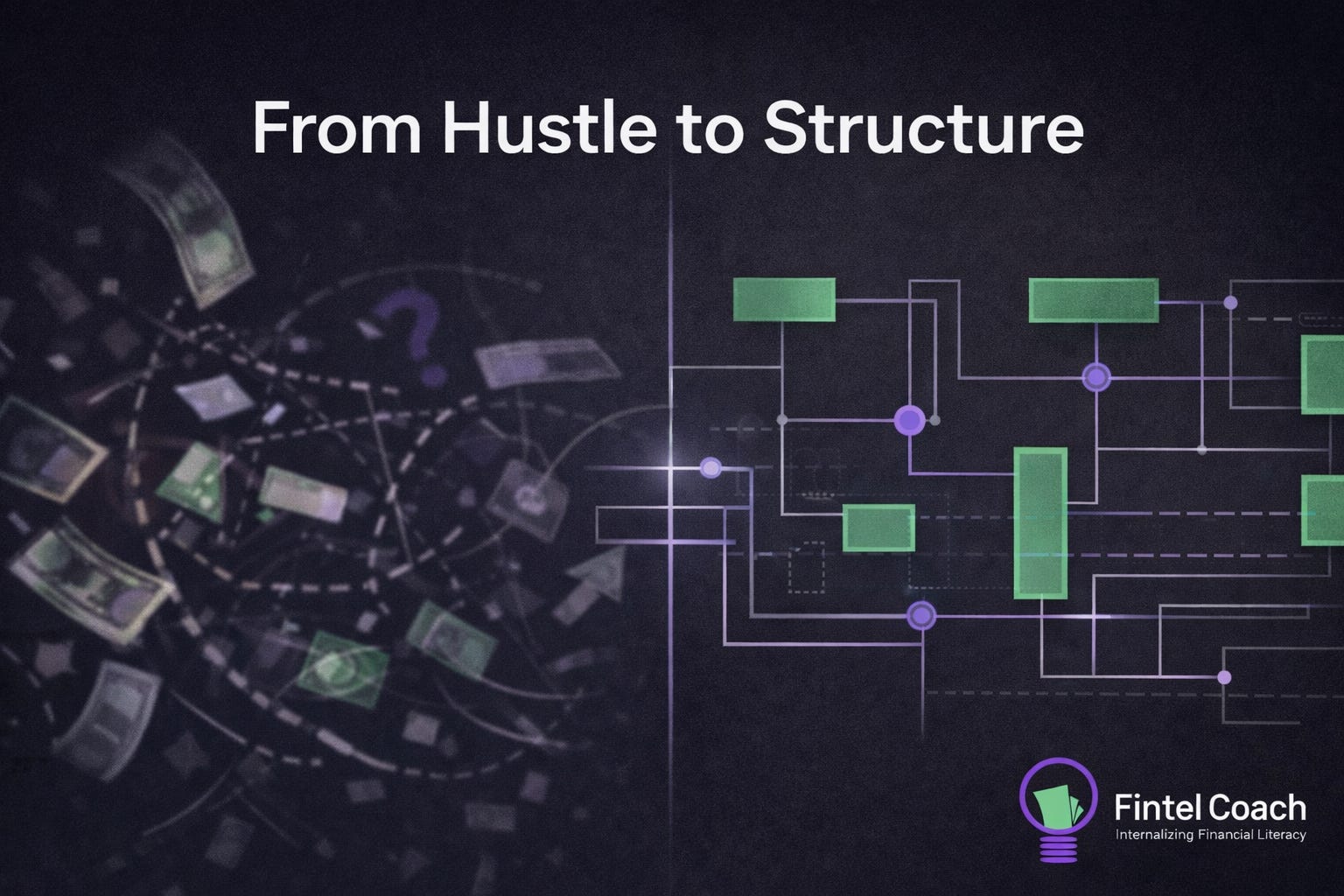
To be fair, the hustle does work for a while. it gets you moving, builds momentum, and helps you escape stagnation. But there is a quiet moment many of us reach where we realize that the hustle is no longer solving the problem it once did. It is only maintaining the status quo.
Where the Hustle Quietly Starts to Fail
The hustle is great at getting things started, but it is terrible at keeping them going. You can work your way into a higher-paying job, a scaling business, or more responsibility, but you cannot hustle your way into clarity.
At some point, hard work stops providing relief. The days get longer, but your peace of mind doesn’t grow with them. The income increases, but the stress stays right on its heels. You find yourself busy, exhausted, and still unsure of where everything is actually going.
This is usually when people think they need to work even harder. The truth is, they need something else entirely: they need structure.
Hustle is Human, Systems are Mature
Hustle is energy-dependent, while systems are design-dependent. The hustle relies on how you feel today, but a system works regardless of your mood.
This isn’t a criticism of hard work. It is just a recognition of reality. Most people don’t fail financially because they are lazy. They fail because they are trying to manage increasingly complex lives with nothing but willpower and improvisation. The problem is that improvisation doesn’t scale.

What Structure Actually Changes
Structure doesn’t mean being rigid. It means having clarity. It involves:
Knowing what money is meant to do before it even arrives.
Separating your decisions from your emotions.
Removing unnecessary choices that drain your brain power.
Making your progress visible so you aren’t guessing.
Structure turns money from something you react to into something you operate. This is the shift most people never make, not because it is hard, but because no one taught them to think this way. We were taught how to work hard, but we were never taught how to design a system.
Why This Matters Right Now
Over the past few years, I have spent a lot of time thinking about why so many smart, hardworking people feel stuck. I realized that having more information is no longer the answer. We have more access to financial advice than ever before. What we actually lack are the frameworks and tools to apply that knowledge in real life.
This is why I talk so much about financial education technology. When your financial life becomes complex, motivation isn’t enough. You need infrastructure.
A Quiet Note About What’s Coming
February is an important month for us. It isn’t about noise or hype, but several things we have been working on quietly are about to be shared. Each one is built around a single idea: helping you move from the hustle to a structure.
Some of these will look like tools, some like systems, and some like frameworks. But they all exist to solve the same problem: financial chaos disguised as effort.
If you have ever felt like you are doing a lot but still just guessing, pay attention over the coming weeks. Not everything is for everyone, and that is intentional.
A Final Thought
The hustle got many of us started. It helped us survive and it helped us grow. But survival is not the same thing as control.
At some point, the question has to change from “How hard can I work?” to “How well is this designed?” That is the transition I care about, and that is the conversation we will keep having here.
If you are reading this and thinking, “This is exactly how I feel, but I have never had the words for it,” then you are in the right place.
More soon. Quietly. Deliberately.
To your structured lifestyle,
Obot Essiet Jr.
FINTEL Coach
Thank you for putting this educative piece together.
Really strong articulation of the improvisation trap. The line about improvisation not scaling is spot on. I've experiened this exact shift in my own work where adding more hours stopped producing better outcomes. The distinction between energy-dependent vs design-dependent systems reframes productivity completely. Structure isn't rigid, its liberating.